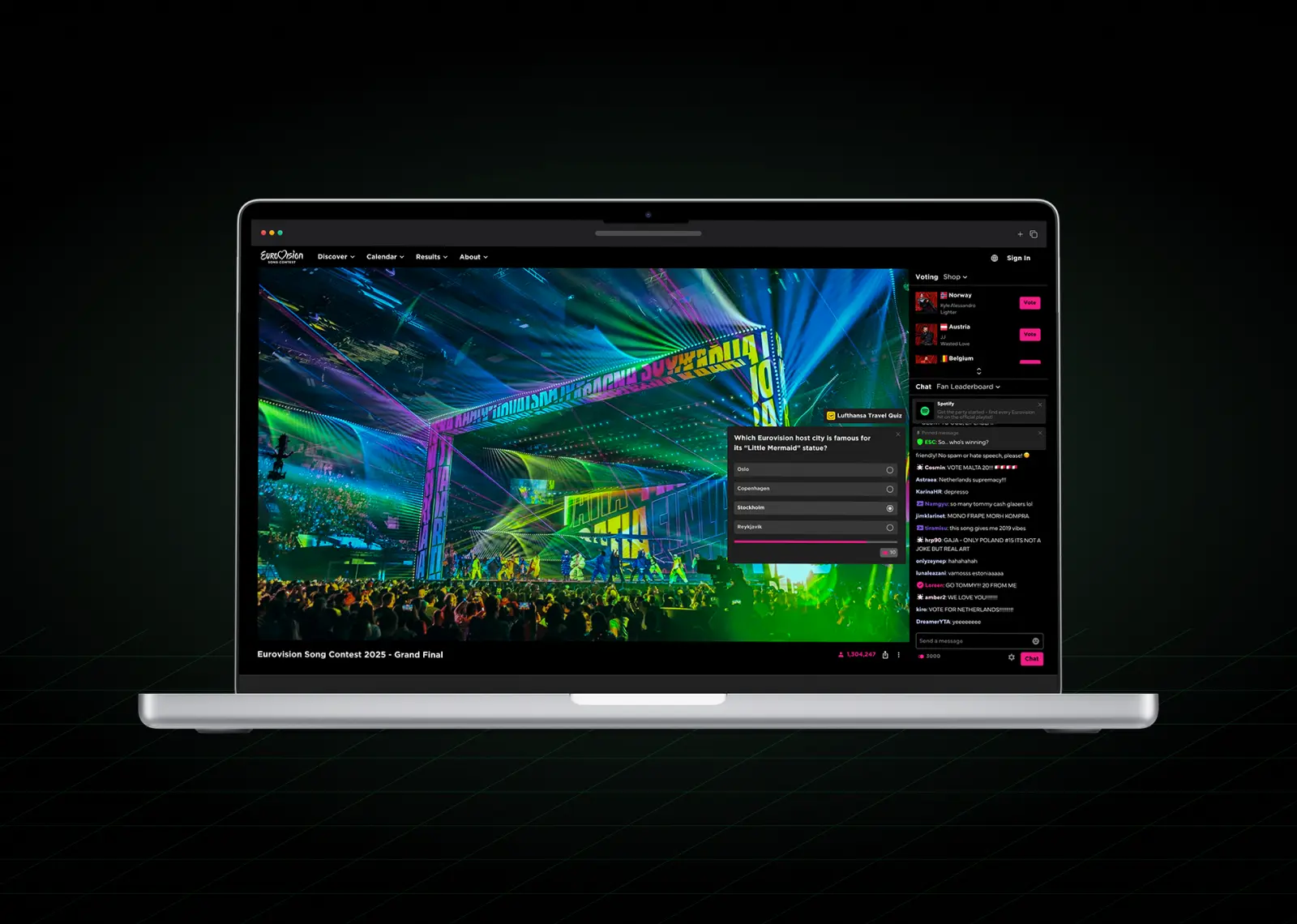
I designed the Eurovision Streaming Platform concept as a strategic business proposal for the European Broadcasting Union, leveraging Once's proprietary mass interaction technology to transform passive viewing into active fan engagement. As this project is covered by a non-disclosure agreement, the details below offer a high-level summary of the work completed.
Once already served as Eurovision's voting partner, handling peak loads during live broadcast. However, they had previously lost the Eurovision mobile app contract; the company possessed robust infrastructure but needed new application opportunities that aligned with both Eurovision's brand and fan expectations.
I worked on this project under significant constraints: no dedicated research operation and a five-month deadline from concept to pitch.

A mixed-methods research approach was deployed to identify established fan behaviours and needs:
Eurovision is overwhelmingly consumed as social experience — watch parties with friends and family are the norm. However, most parties lack access to Eurovision-related activities, creating missed engagement opportunities.
Voting likelihood increases when there are bundles with clearly outlined extras (exclusive content, digital collectibles, chat features).
New fans struggle with community gatekeeping and lack context for ongoing discussions, creating friction in joining Eurovision fandom.
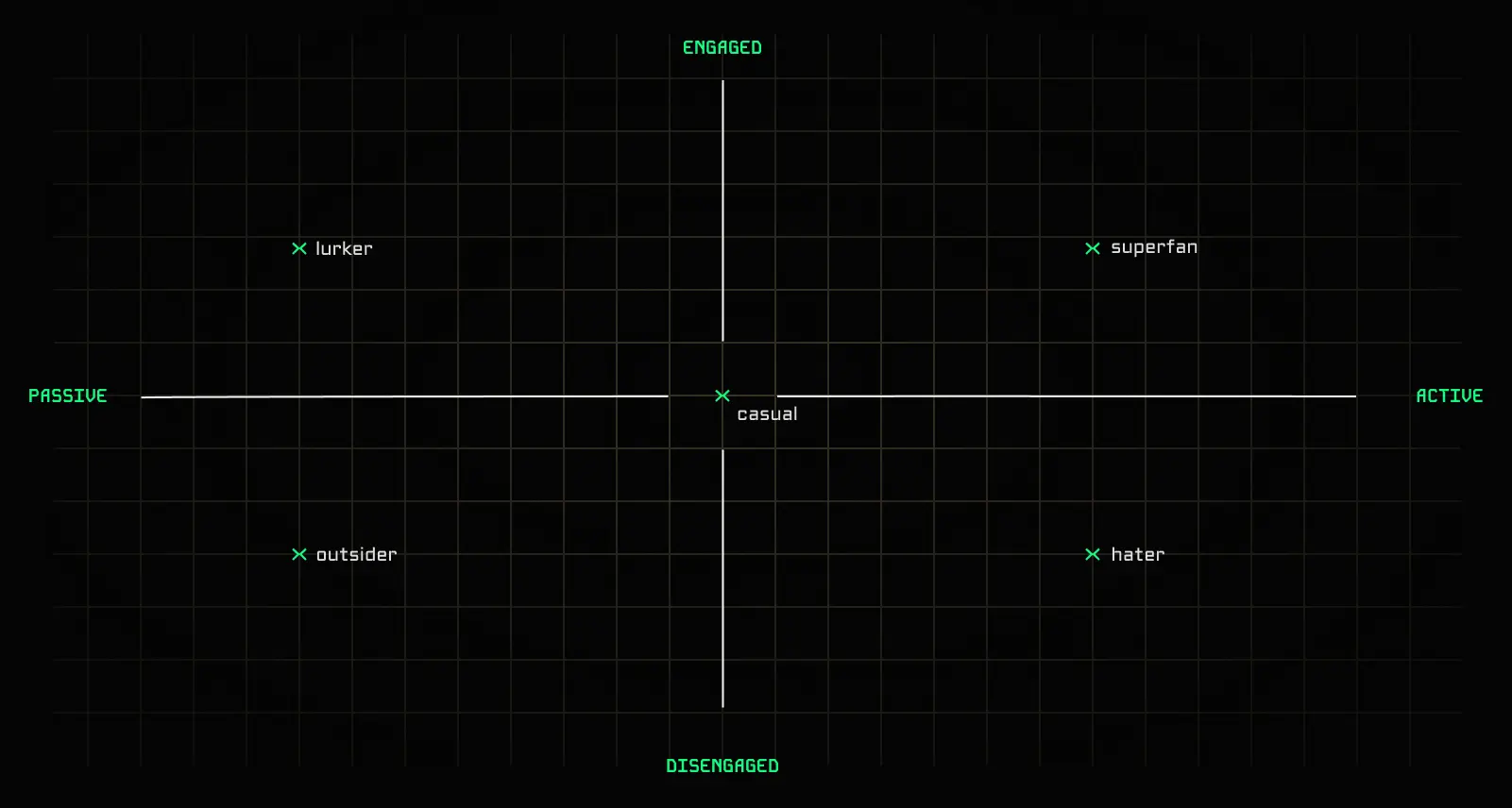

Research findings informed the user personas I created, from casual viewers to superfans. Together with management, I determined the strategic focus: active, engaged users represented the highest-value segment. While casual viewers represented larger absolute numbers, active fans possessed:
Retention value (multi-year fans vs. one-time viewers)
Greater monetization willingness (voting, merchandise, premium features)
Higher engagement frequency (every Eurovision event, not just finals)

After identifying our target segment, I led brainstorming sessions exploring overlap between Once's technical capabilities and user needs. A promising solution surfaced: a dedicated Eurovision streaming platform, with expanded possibilities of fan expression, improved monetisation models and implementation of real-time mass activities.
Analysis of leading streaming platforms informed my core design principles:
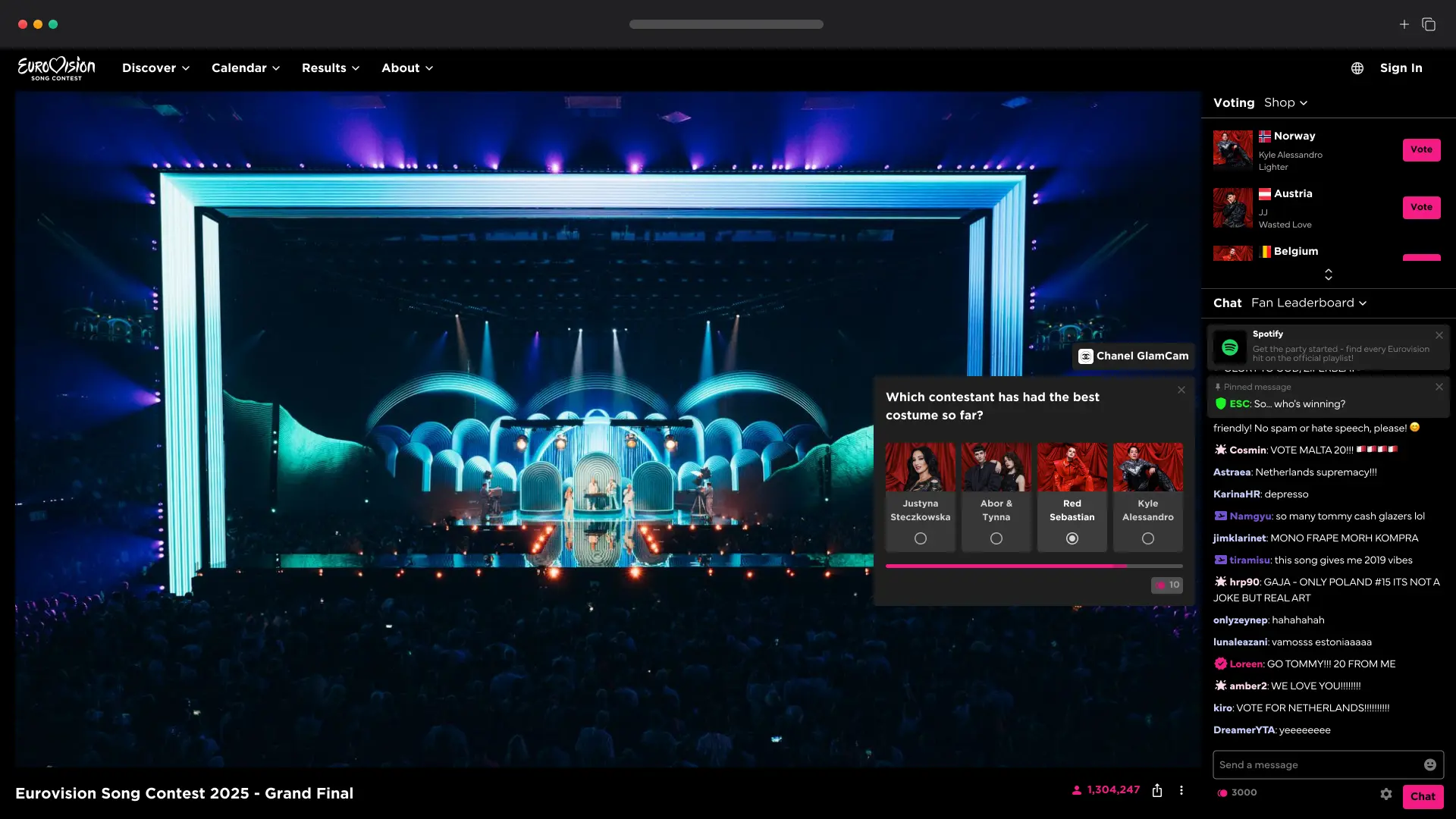
Voting must integrate into contest flow and remain easily visible. Friction in voting path would directly impact revenue potential.
Chat should remain prominent to maintain event energy. Social context is core to the Eurovision experience and hiding the chat would undermine this.
Traditional TV viewers who want a clean viewing experience shouldn't feel overwhelmed by additional information layers.
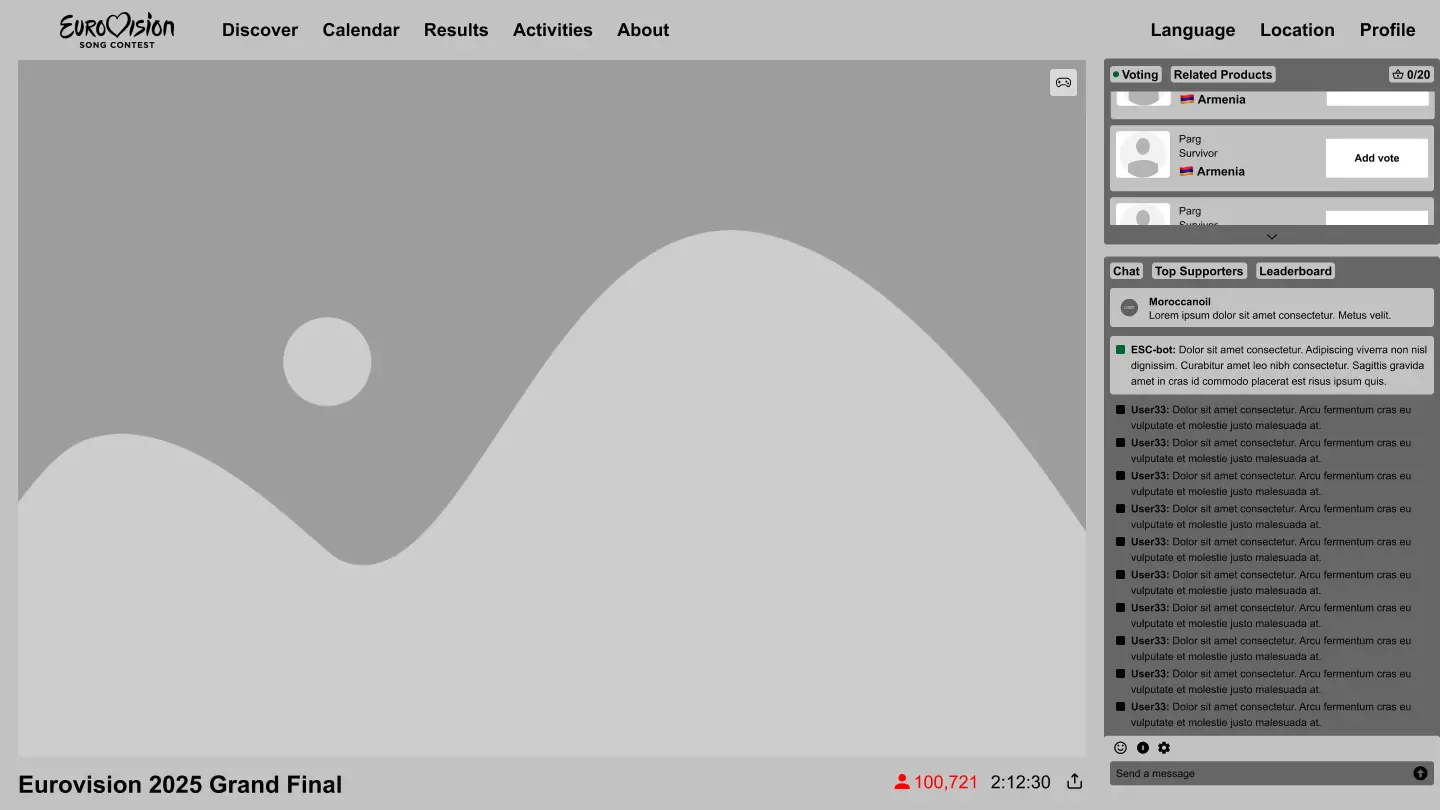
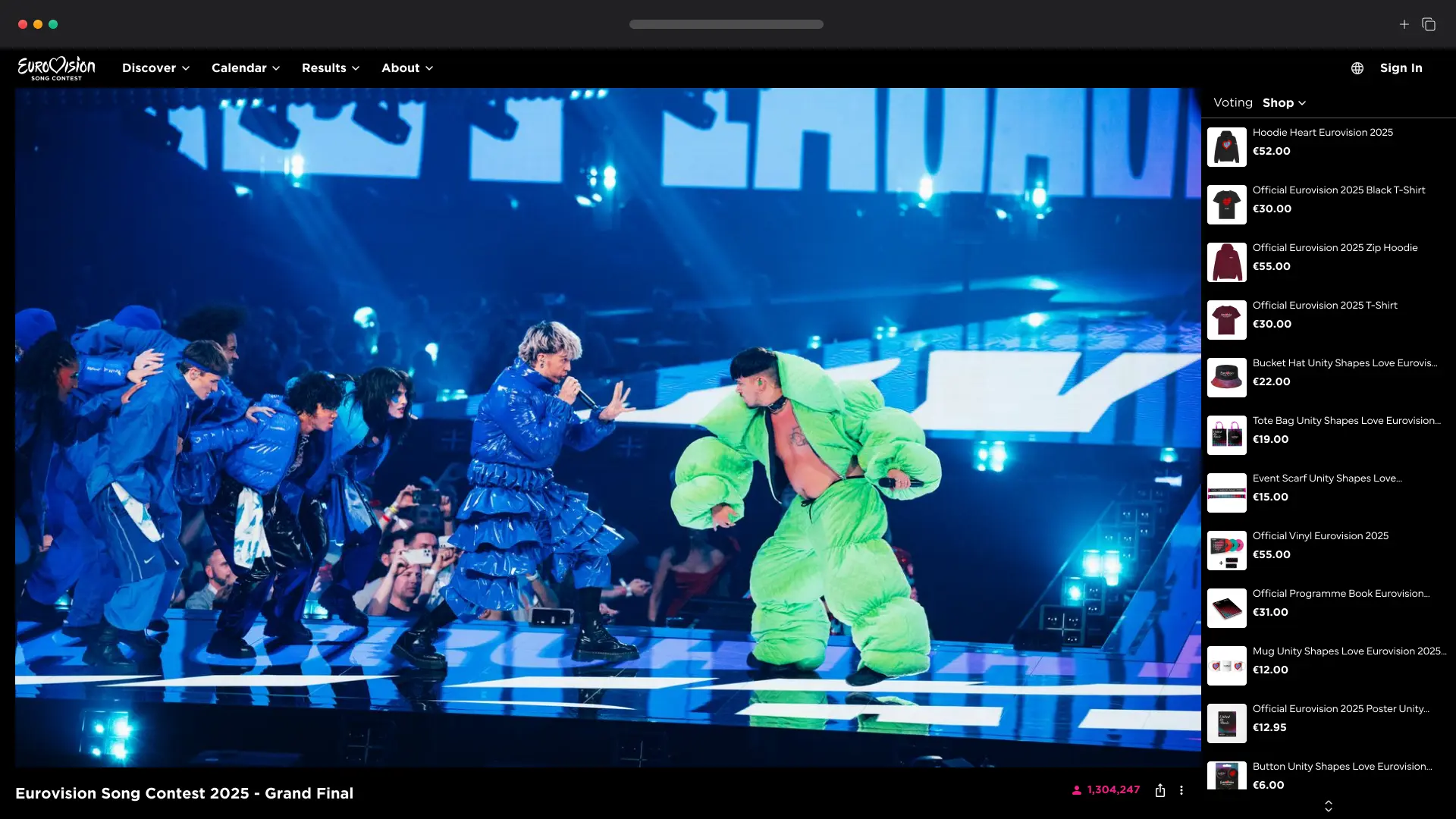
I brought together months of research, competitive analysis, and interaction design into a final streaming platform design that showcases Once's technical capabilities.
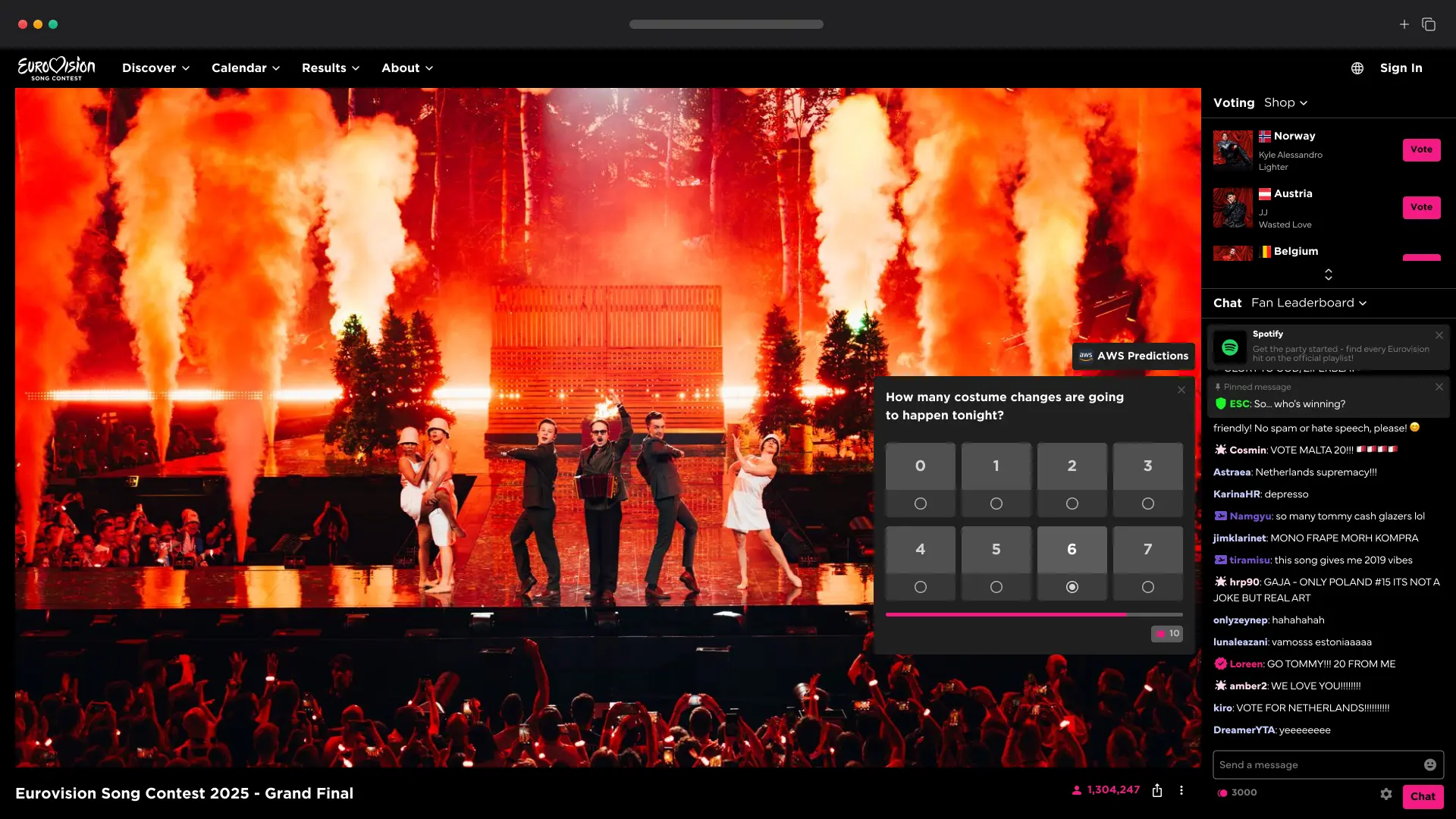
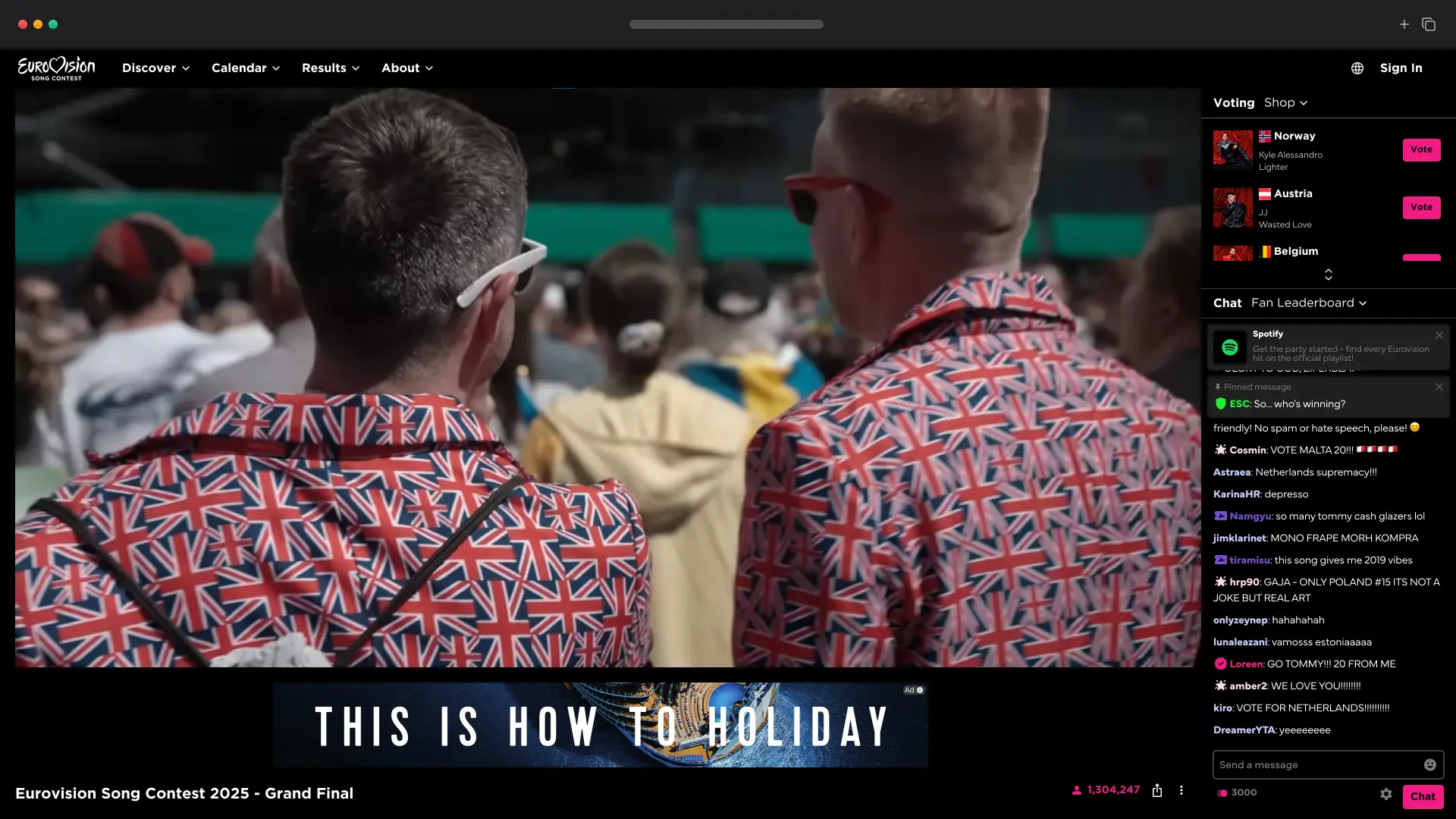
Given the limited scope of this project, this concept explored a small but highly-valuable set of features, which would help secure a deeper partnership with EBU: ad integration, sponsored activities, chat interactions, along with a more intuitive voting integration.
To bring the concept to life, I developed a compact design system built on a 4px grid and aligned with typographic standards from the existing Eurovision website. A flexible colour palette was introduced to accommodate the yearly visual updates.




My research into established streaming operations like F1 and LoL Esports revealed Eurovision was leaving significant revenue on the table. Both had successfully deployed branded segments; benchmarking these models showed Eurovision could capture 5-7x current revenue streams through similar integration. Therefore, our proposal included several sponsor activation opportunities.
Although the project was ultimately cancelled due to a strategic pivot, it has taught me several valuable lessons:
Perfect understanding never exists; when research insights can inform decisions, move to the next design phase.
Establishing design system early pays significant dividends. The temptation to "just design screens quickly" creates inconsistency that becomes costly to fix.
Innovation should focus where it creates unique value. Borrowing proven patterns for common design problems frees creative energy for domain-specific challenges.