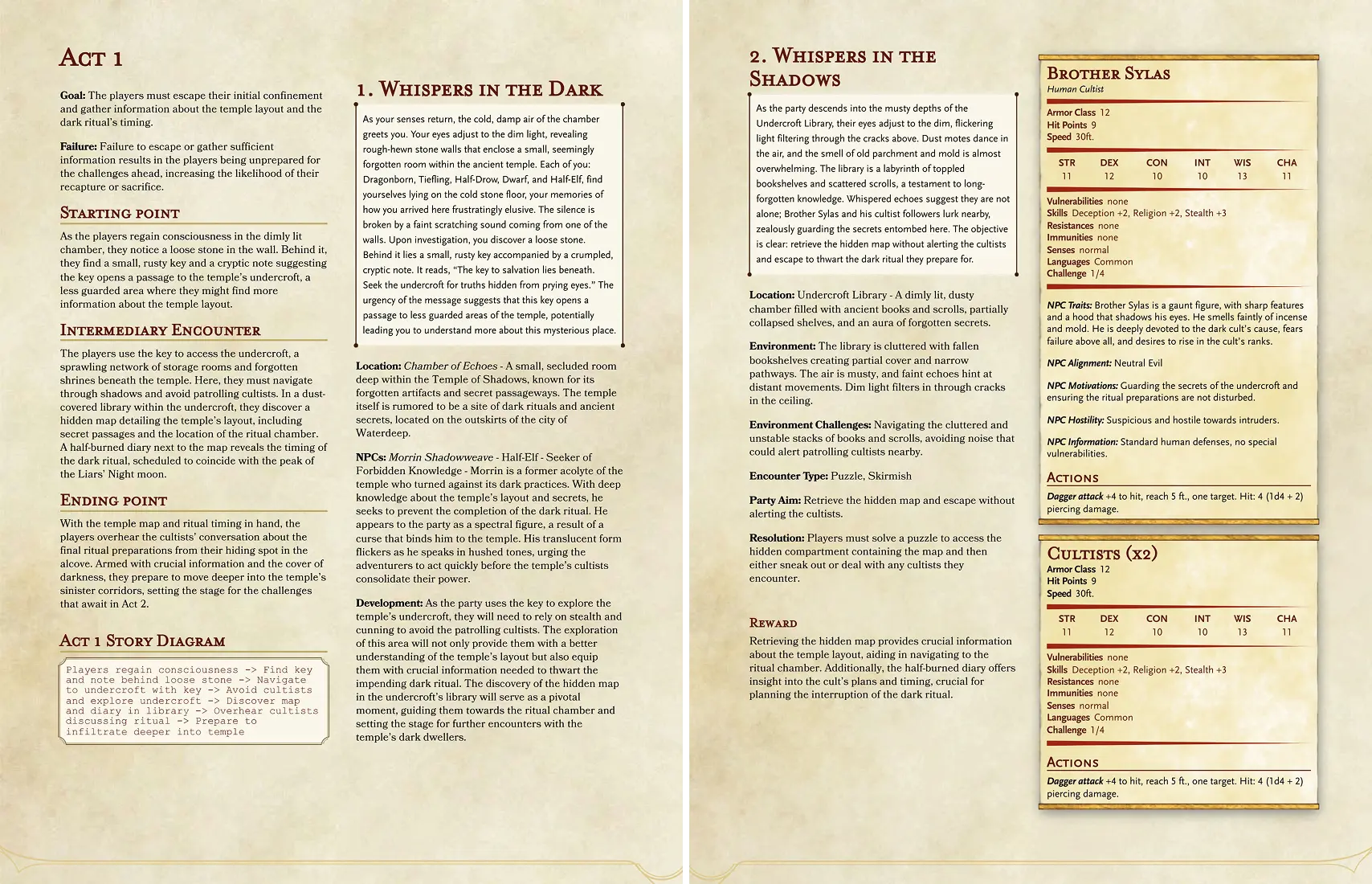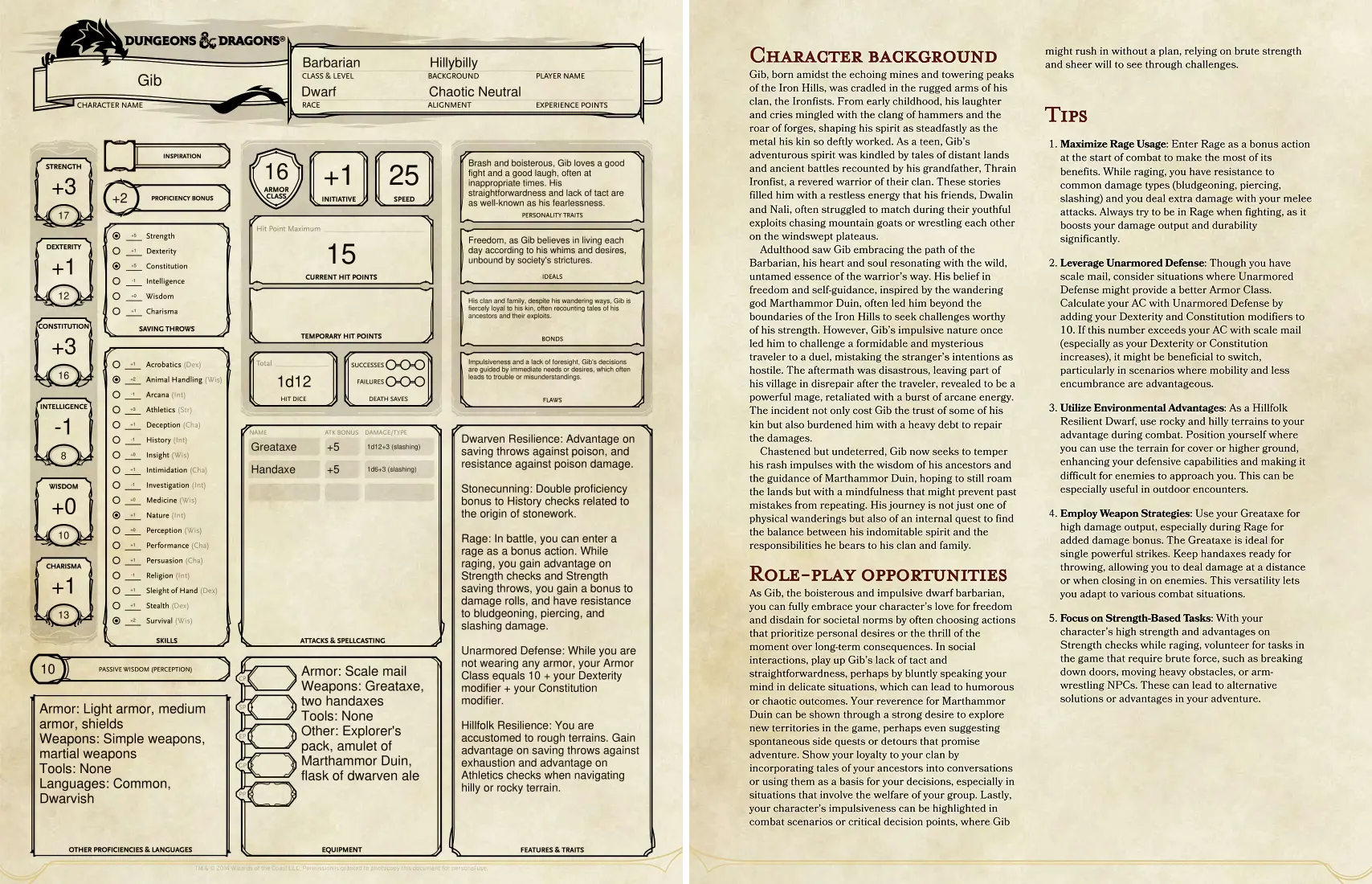
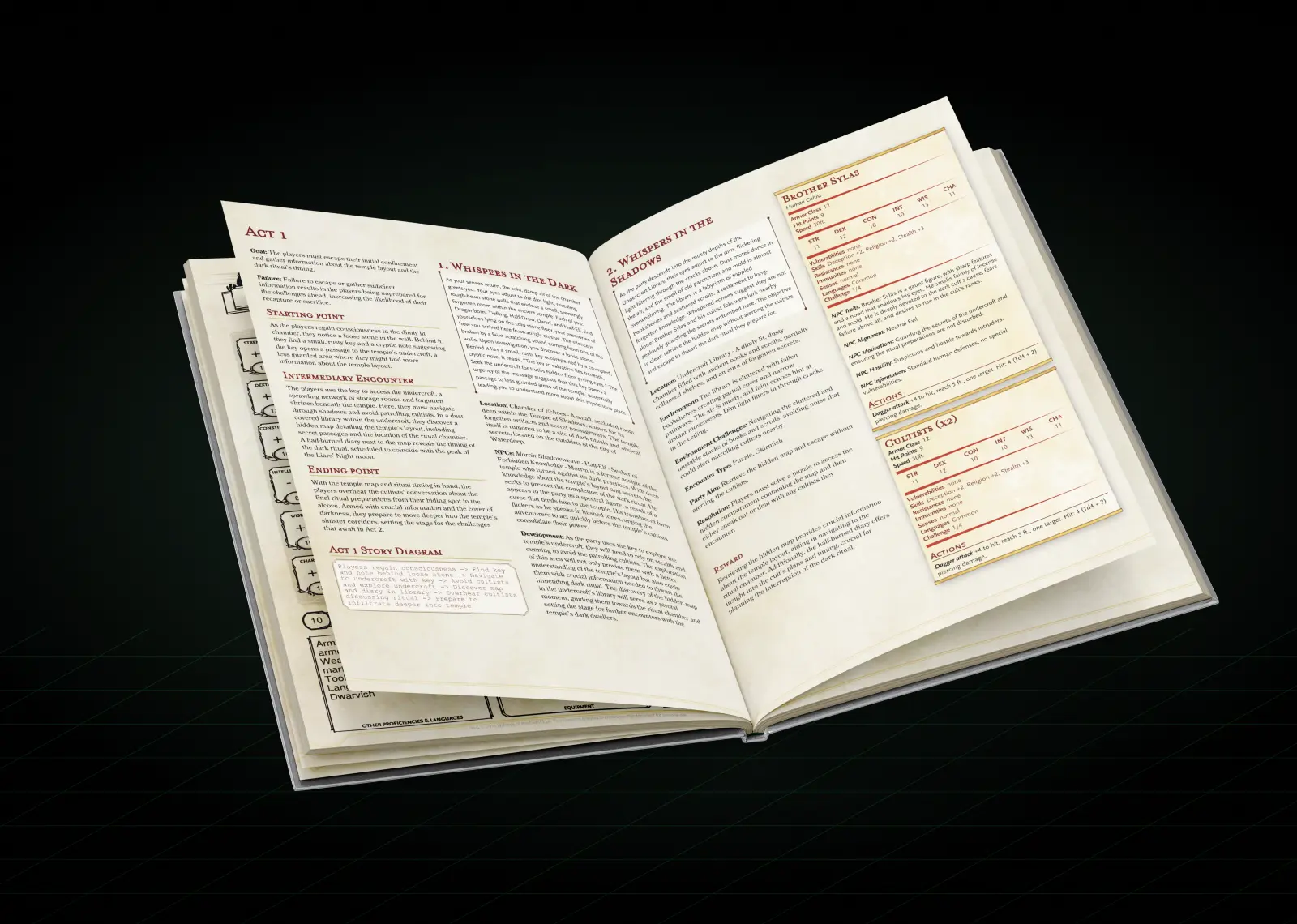
Test Quest is a software tool that produces custom Dungeons & Dragons adventures to ease the onboarding process for new player groups. Over six months as a solo graduation project, I combined interaction design and a passion for tabletop games to help novices jump into the game faster and more confidently.

D&D serves as more than entertainment — it's a collaborative sandbox where groups build social bonds through shared experience. Yet newcomers face significant barriers: complex rulebooks, expensive starter kits, and time-intensive preparation. Therefore, my objective was to reduce these onboarding frictions.
I deployed a mixed-methods research approach to identify the most relevant pain points within the D&D community:
Rule complexity impeding game flow
Low role-playing confidence preventing character immersion and detracting from the social experience
Character creation processes exceeding user patience thresholds

CCR-CODER COMPILING HANDSHAKE ESTABLISHED: X01 ID: 7428-2339-0841-5069
CCR-CODER COMPILING HANDSHAKE ESTABLISHED: X03 ID: 2325-9994-0831-5069
I applied the Double Diamond framework from brainstorming through testing. User insights and iterative prototyping helped me establish three core design principles:
Players must never feel overwhelmed or distracted during the game creation process.
Game materials must be fit to match user experience levels.
Content must maintain consistent story logic across all game elements, to avoid confusion.
I iteratively refined the content generation architecture: users input minimal character and game preferences; the system then defines custom characters, with advice tailored to their chosen focus. This approach presented several benefits:
Automated generation reduced preparation time
Character-specific rule references were accessible on-demand, preventing mid-session interruptions
Customization options retained player investment and creative expression while maintaining a consistent game setting
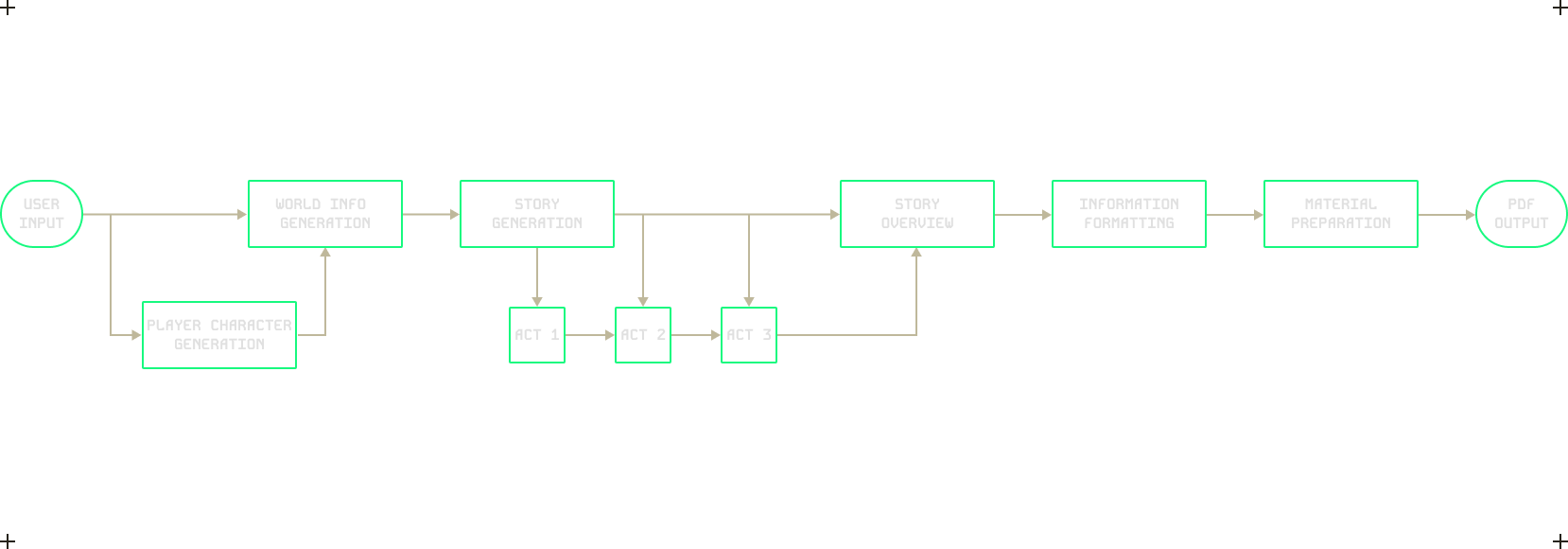

Test Quest executes an LLM-based pipeline via a command-line interface. The system generates characters as JSON files in parallel, then integrates backstories into a unified knowledge base containing all campaign information.
The world lore guides sequential generation of three narrative acts, each containing unique characters and encounters calibrated to campaign focus. After generating each act, the system compacts it into a contextual overview for subsequent acts, maintaining narrative coherence and preventing information conflicts.
The generated materials are formatted to print-ready PDFs via the Homebrewery web app, outputting complete D&D adventures in 20 minutes at an average cost of €1.5 per set.



12 hours of structured tests were organised with 15 novice participants to validate system effectiveness. I used pre/post-test surveys, focus group discussions, quantitative observation and thematic analysis to assess overall performance:
I found context architecture to be the primary quality determinant: comprehensive information yielded superior character integration and backstory coherence
While Test Quest demonstrates how LLM-based content pipelines can reduce onboarding frictions, I found generated materials ultimately lack the imaginative depth of human-made content. I recommend gradually transitioning to own materials as experience grows to encourage creative exercise.
For more information, please see:
https://purl.utwente.nl/essays/100744